


By Jessica Cox
The Liberia Telecommunications Authority (LTA) has announced a series of sweeping reforms aimed at increasing government revenue, expanding digital access to schools and underserved communities, lowering telecommunications costs, and tightening regulatory oversight of the sector, while defending its management of the country’s international gateway monitoring system against allegations of financial misconduct.
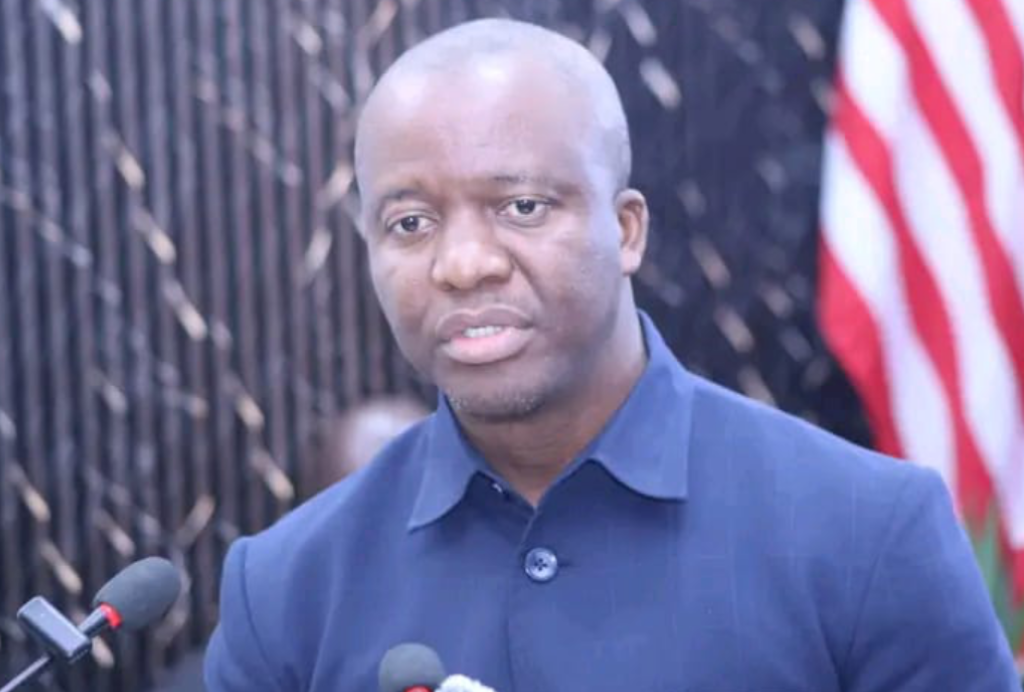
Speaking during the Ministry of Information’s regular press briefing on Tuesday, LTA Acting Chairperson Clarence Massaquoi said the Authority is implementing a broad reform agenda that aligns with President Joseph Nyuma Boakai’s digital transformation strategy and commitment to transparency, accountability, and improved public service delivery.
At the center of the reforms is a new gateway monitoring arrangement that increases the Government of Liberia’s share of telecommunications gateway revenue from 51 percent under the previous agreement to 60 percent, while reducing the private operator’s share from 49 percent to 40 percent.
Although the LTA declined to estimate the exact amount of additional revenue government will generate, Massaquoi explained that the revised revenue-sharing formula guarantees that government will receive a larger portion of earnings regardless of fluctuations in call traffic.
“Revenue is not a fixed figure because telecommunications usage changes from month to month,” he said. “However, with government now receiving 60 percent instead of 51 percent, it is clear that the country stands to benefit more from the new arrangement.”
The new arrangement follows President Boakai’s suspension of the previous Telecommunications International Alliance (TIA) concession after investigations by the General Auditing Commission and the Liberia Anti-Corruption Commission identified procurement irregularities and contract modifications that substantially favored the private contractor.
Executive Order No. 154 directed the LTA to terminate implementation of the TIA agreement and procure a new service provider in compliance with the Public Procurement and Concessions Act.
Addressing allegations circulating in sections of the media regarding corruption in the management of gateway revenues, Massaquoi categorically denied any wrongdoing.
He said the LTA strictly complied with the President’s Executive Order and all procurement procedures required under the PPCC Act, stressing that reports relating to implementation of the Executive Order have already been submitted to the President.
“No financial malpractice has happened anywhere,” he declared, adding that all actions taken by the Authority remain within the framework of the Executive Order.
The Authority has previously stated that it welcomes any independent audit of the gateway monitoring system and maintains that reforms are intended to correct deficiencies in the previous arrangement while increasing public revenue and strengthening institutional accountability.
Beyond revenue reforms, the LTA announced major initiatives to expand digital infrastructure across Liberia.
Massaquoi disclosed that the government has directed the inclusion of an additional 28 public schools into the national School Connect Program, bringing internet connectivity to all targeted schools under the initiative.
The project forms part of Liberia’s broader digital education agenda implemented in partnership with the Ministry of Education, the World Bank and Starlink.
According to the Ministry of Education, all 156 public schools benefiting from the Improving Results in Secondary Education (IRISE) Project are now being connected to the internet, with each school receiving digital laboratories equipped with electronic learning resources.
The LTA also revealed that assessments are underway at the University of Liberia and other public institutions as government seeks to improve internet access and digital learning nationwide.
“Our objective is to ensure that students in public schools can access the same educational resources available elsewhere in the world,” Massaquoi said.
The Authority further announced plans to amend its telecommunications licensing regulations to encourage operators to expand services into underserved counties, particularly southeastern Liberia, where the high cost of deploying fiber-optic infrastructure has discouraged private investment.
Under the proposed reforms, companies willing to extend services into commercially less attractive areas will receive incentives intended to reduce investment risks.
“It is our belief that Monrovia is not Liberia,” Massaquoi said, emphasizing government’s commitment to decentralizing digital development.
On consumer protection, the LTA acknowledged persistent public complaints regarding mobile data bundles expiring during prolonged network outages.
Massaquoi said customers who lose prepaid data because of verified service interruptions can report such cases to the Authority for investigation and possible reimbursement by service providers. He noted that operators have already refunded subscribers in documented cases where network failures prevented customers from using purchased data.
The Authority is also reviewing a World Bank study on telecommunications pricing, including Liberia’s relatively high interconnection charges, with the possibility of reducing consumer costs once the Board of Commissioners completes its review.
Meanwhile, the LTA confirmed that construction of its new headquarters remains underway.
According to Massaquoi, work has slowed because the building is being designed as a smart facility with advanced digital infrastructure installed before completion, a move intended to avoid expensive future renovations.
The Commission also defended its recent decision to revoke the operating license of Starcell after the company reportedly failed to commence operations since receiving its license in March 2020.
The Authority said companies cannot continue holding valuable telecommunications spectrum indefinitely without meeting the conditions attached to their licenses.
Cellcom (GenCell), however, remains under regulatory review after requesting discussions with the Commission regarding its operational status.
In addition, the LTA appealed to media institutions operating without valid licenses or failing to meet their financial obligations to regularize their status before enforcement measures begin.
As Liberia accelerates its national digital transformation agenda through President Boakai’s Executive Order establishing the Office of Technology, Digitalization and Innovation, the LTA says its ongoing reforms are intended to modernize telecommunications regulation, expand digital inclusion, strengthen public accountability, and ensure that technology becomes a driver of national development rather than a privilege reserved for urban communities.