

Women’s organizations across Maryland County have demonstrated resilience in advancing the rights of women and girls despite operating with limited support. They have sustained grassroots advocacy, supported survivors of violence, promoted women’s leadership, and kept their organizations active through unity, collective action, and community-led initiatives.
The Women NGOs Secretariat of Liberia (WONGOSOL), in partnership with UN Women Liberia under the Spotlight Initiative 2.0 Project (funded by the European Union), conducted an assessment to highlight these achievements. The assessment brought together members of the Rural Women Structure and community-based women’s organizations to identify existing strengths, document challenges, and recommend actions for strengthening survivor-centered services and community responses to violence against women and girls.
Throughout the engagement, women leaders shared how they have sustained their organizations through Village Savings and Loan Associations (VSLAs), farming, volunteerism, community contributions, and local resource mobilization. Their experiences demonstrate that Maryland County’s women’s movement is built on resilience and solidarity. The Spotlight Initiative 2.0 Project seeks to build on these existing strengths by strengthening grassroots women’s organizations, improving access to survivor services, enhancing coordination and referral systems, and ensuring that the voices of rural women inform efforts to end violence against women and girls.
For many years, women’s organizations across Maryland County have served as the first point of support for women and girls experiencing violence and other forms of vulnerability. They have promoted women’s leadership, mediated community disputes, raised awareness on gender equality, and accompanied survivors through health, police, and justice processes.
Yet these responsibilities have often been carried out with very limited financial and institutional support. Operating across remote communities, the organizations face numerous challenges, including inadequate transportation, weak referral systems, limited access to legal aid, and the absence of Safe Homes and One-Stop Centers for survivors of violence. Many organizations depend almost entirely on volunteers, making it difficult to consistently respond to cases or sustain regular programming.
Despite these obstacles, the women have refused to allow their organizations to become inactive. Instead, they have relied on their unity, determination, and locally available resources to continue serving their communities.
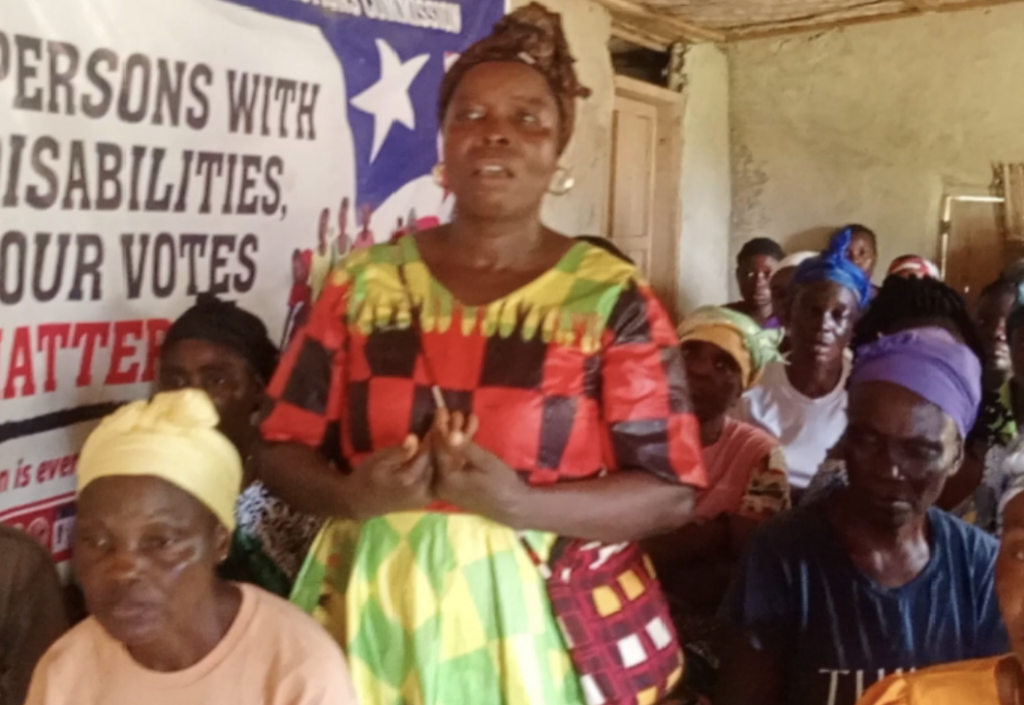
As part of the Spotlight Initiative 2.0 Project, WONGOSOL and UN Women Liberia conducted an assessment with the Rural Women Structure and community-based women’s organizations across Maryland County to better understand the realities facing women and girls at the community level.
The assessment created a platform for women leaders to reflect on their achievements, document existing strengths, identify persistent challenges, and recommend practical actions to strengthen survivor-centered services and community-based responses to violence against women and girls.
The discussions also reinforced the importance of stronger collaboration among grassroots organizations, local authorities, government institutions, and development partners to build sustainable protection systems for women and girls.
Results and Impact
Although the Spotlight Initiative 2.0 Project is still in its assessment phase, one of its key findings has been the resilience, solidarity, and organizational strength that already exists among Maryland County’s women’s groups.
Despite limited funding, women’s organizations have continued to sustain their work by:
· Operating Village Savings and Loan Associations (VSLAs), enabling women to save, access small loans, and support both household needs and organizational activities.
· Engaging in farming and other livelihood activities to generate income and keep their organizations functioning.
· Mobilizing local resources and lobbying county authorities, partners, and community members each year to commemorate International Women’s Day, ensuring women continue to gather, network, and advocate collectively.
· Supporting survivors of violence through referrals, accompaniment, and community awareness whenever resources permit.
· Conducting awareness campaigns on women’s rights, peacebuilding, leadership, and the prevention of sexual and gender-based violence.
· Maintaining strong coordination through the Rural Women Structure, allowing women’s organizations across the county to share information, coordinate advocacy, and amplify women’s voices.
The assessment also highlighted the women’s remarkable ability to mobilize communities during advocacy campaigns.
In 2021, thousands of women across Maryland County united to demand justice following the killing of Modecious Nyemah, a high school student who was preparing to sit the West African Senior School Certificate Examination (WASSCE). Despite heavy rain, scorching sun, long distances, and limited financial resources, women from different communities organized themselves, travelled together, and peacefully demanded accountability.
Their continued commitment to advocacy, survivor support, and community mobilization demonstrates that strong grassroots structures already exist and can be further strengthened through targeted investment and partnership.
Eliza D. Sarlee, Vice President and Co-Chair of the Rural Women Structure, said the experience showed what women can achieve when they stand together.
“Rain beat us and the sun flogged us, but we stood there. We picked up the traditional bell to call women together. Whenever you heard the bell, you knew women were coming out. Women came from different places because we wanted justice.”
Sarlee believes that the demonstration proved that even without financial resources, women possess the determination and organizational strength to mobilize entire communities around issues affecting women and children.
Martha Karly, Speaker of the Rural Women Structure, said the assessment gave women an opportunity to share concerns they have carried for years while also expressing hope for stronger support.
“We need help here. Many women don’t know where to go when these things happen. Sometimes you can start following a case, but when you don’t have support, the matter just dies. That is why I am happy WONGOSOL and UN Women came. At least now people are listening to us and hearing the things we have been carrying in our hearts for years.”
Speaking during a meeting with the Rural Women Structure of Maryland County, Spotlight Initiative Coordinator Deodaata Mukazyire emphasized the importance of strengthening accountability mechanisms and ensuring survivors receive the protection and support they need.
Mukazyire noted that the Spotlight Initiative 2.0 Project seeks to address gaps in prevention, response, and access to justice for survivors of sexual and gender-based violence. She stressed that communities must be empowered with information, services, and systems that promote justice while preserving the dignity of survivors.
She further underscored the importance of listening to the experiences of women and girls at the community level, noting that their voices are critical to informing interventions that respond to their realities and needs.
The assessment reaffirmed that Maryland County already has strong grassroots women’s structures capable of driving sustainable change. By investing in these existing networks, the Spotlight Initiative 2.0 Project aims to strengthen survivor services, improve prevention efforts, and support community-led solutions that advance gender equality and contribute to ending violence against women and girls.
Participants also identified priorities for strengthening their work and recommended increased financial and institutional support for grassroots women’s organizations. They called for the establishment of safe homes and one-stop centers for survivors of violence, and improved access to legal aid and psychosocial services. Among other things, they proposed stronger referral pathways linking communities with health, police, and justice institutions, and continued capacity-building in advocacy, leadership, case management, and resource mobilization.
Participants also emphasized the need for greater investment in Village Savings and Loan Associations (VSLAs), farming initiatives, and other livelihood opportunities that strengthen women’s economic resilience. They called for stronger collaboration between government institutions, development partners, and community-based women’s organizations, as well as sustained engagement with rural women to ensure their voices continue to shape policies and programmes addressing violence against women and girls.
As the Spotlight Initiative 2.0 Project progresses, the women of Maryland County remain committed to sustaining the movement they have built over the years. Their story is one of resilience, unity, and determination. It is a reminder that meaningful change often begins long before funding arrives, with women who organize, support one another, and refuse to give up. With the right partnerships and investment, these grassroots organizations are well positioned to expand their impact and continue building safer, more inclusive communities for women and girls across Maryland County.