


-Of Liberia’s Priority Energy Projects
By: Julius Konton
Liberia has taken another significant step toward securing a second compact from the United States Millennium Challenge Corporation (MCC), as the Government officially launched a high-level technical scoping mission aimed at assessing priority energy infrastructure projects that could reshape the country’s electricity sector and accelerate long-term economic growth.
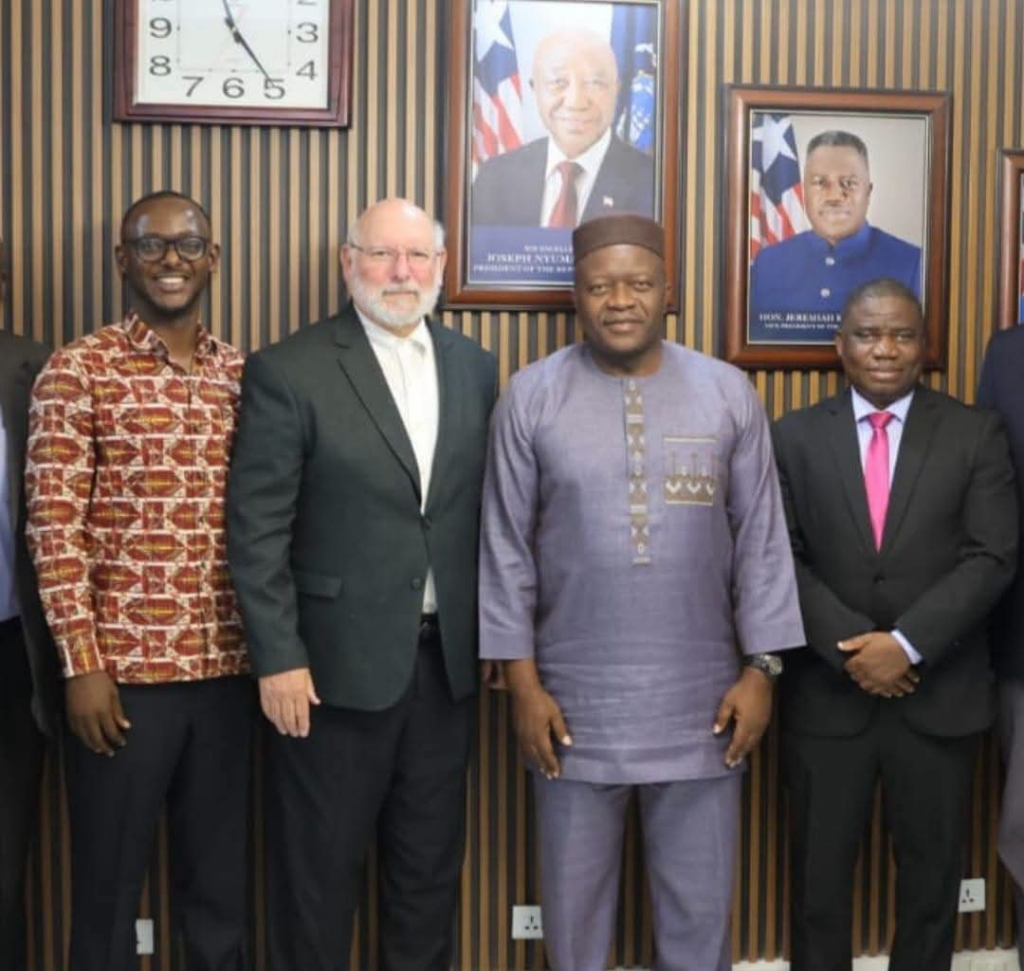
The mission was formally launched on Monday when Liberia’s Minister of Finance and Development Planning, Augustine Kpehe Ngafuan, welcomed a delegation from the MCC at the Ministry of Finance and Development Planning in Monrovia.
The visit marks a crucial phase in Liberia’s Compact Development Process, during which technical specialists will evaluate the feasibility, readiness, and potential economic impact of proposed energy investments before final project selection.
Addressing the delegation, Minister Ngafuan emphasized that expanding access to reliable, affordable, and sustainable electricity remains one of the Liberian Government’s highest development priorities.
He described the energy sector as the cornerstone of economic transformation, noting that stable electricity is essential for attracting private investment, supporting industrialization, creating jobs, strengthening healthcare and education services, and improving the overall quality of life for Liberians.
“The energy sector is fundamental to Liberia’s economic transformation,” Minister Ngafuan said, reaffirming the Government’s commitment to implementing the Compact Development Process in accordance with MCC’s rigorous standards, transparency requirements, and implementation timelines.
The Finance Minister also expressed appreciation for the longstanding partnership between Liberia and the United States Government through the Millennium Challenge Corporation, describing the collaboration as a critical driver of institutional reform and sustainable development.
The U.S. delegation is led by Jonathan S. Saiger, Senior Operations Advisor in the MCC Department of Compact Operations, and includes technical specialists from Tetra Tech, the engineering and due diligence contractor supporting the Compact development process.
Mr. Saiger acknowledged Liberia’s significant progress in strengthening democratic governance, improving public financial management, and advancing institutional reforms over the past decade.
However, he stressed that sustained economic growth will now depend largely on strategic investments in infrastructure particularly electricity transmission and distribution systems to unlock the country’s economic potential.
The technical mission, scheduled to run from July 20 to July 28, 2026, will conduct extensive field assessments and technical scoping exercises across key electricity transmission corridors in Montserrado, Grand Cape Mount, Gbarpolu, Bomi, Margibi, Bong, Nimba, and Grand Bassa Counties.
The findings will help determine the technical feasibility, environmental considerations, engineering requirements, and economic viability of the proposed projects before they are submitted for final MCC approval.
Despite recent improvements, Liberia continues to face one of the largest electricity access gaps in Sub-Saharan Africa.
According to international development estimates, national electricity access has risen from approximately 33 percent in 2024 to about 39 percent in 2025, reflecting continued investments in power generation, transmission, and rural electrification.
Nevertheless, millions of Liberians particularly in rural communities remain without reliable electricity.
High electricity costs have long constrained business competitiveness, manufacturing, agricultural processing, and digital economic development.
The Government has therefore identified expanded power infrastructure as a central pillar of its ARREST Agenda for Inclusive Development (AAID), which seeks to accelerate economic diversification, create employment opportunities, and improve service delivery nationwide.
Liberia’s engagement with the Millennium Challenge Corporation dates back more than a decade.
Following successful governance reforms, Liberia became eligible for its first MCC Compact, which supported critical investments in the rehabilitation of the Mount Coffee Hydropower Plant, strengthening the Liberia Electricity Corporation (LEC), and improving road maintenance systems.
Those investments significantly increased electricity generation capacity and helped restore public power supply after years of post-war reconstruction challenges.
The proposed second MCC Compact is expected to build upon those achievements by addressing remaining infrastructure bottlenecks, expanding transmission networks, improving grid reliability, and increasing electricity access to underserved communities.
If approved, the Compact could unlock hundreds of millions of dollars in grant financing, further strengthening Liberia’s infrastructure, boosting private sector investment, enhancing regional competitiveness, and supporting the country’s long-term economic development strategy.
The current technical scoping mission represents one of the most important milestones in Liberia’s journey toward securing a second MCC Compact and reinforcing its strategic development partnership with the United States.